Friday, March 19, 2021

How to Protect Yourself & Others


How to Protect Yourself & Others


Get Vaccinated

  • Authorized COVID-19 vaccines can help protect you from COVID-19.
  • You should get a COVID-19 vaccine when it is available to you.
  • Once you are fully vaccinated, you may be able to start doing some things that you had stopped doing because of the pandemic.
head side mask light icon

Wear a mask

  • Everyone 2 years and older should wear masks in public.
  • Masks should be worn in addition to staying at least 6 feet apart, especially around people who don’t live with you.
  • Wear your mask over your nose and mouth and secure it under your chin.
  • Fit the mask snugly against the sides of your face, slipping the loops over your ears or tying the strings behind your head.
  • If you have to continually adjust your mask, it doesn’t fit properly, and you might need to find a different mask type or brand.
  • Make sure you can breathe easily.

Effective February 2, 2021, masks are required on planes, buses, trains, and other forms of public transportation traveling into, within, or out of the United States and in U.S. transportation hubs such as airports and stations.​

people arrows light icon

Stay 6 feet away from others

users slash icon

Avoid crowds and poorly ventilated spaces

  • Being in crowds like in restaurants, bars, fitness centers, or movie theaters puts you at higher risk for COVID-19.
  • Avoid indoor spaces that do not offer fresh air from the outdoors as much as possible.
  • If indoors, bring in fresh air by opening windows and doors, if possible.
hands wash light icon

Wash your hands often

  • Wash your hands often with soap and water for at least 20 seconds especially after you have been in a public place, or after blowing your nose, coughing, or sneezing.
  • It’s especially important to wash:
    • Before eating or preparing food
    • Before touching your face
    • After using the restroom
    • After leaving a public place
    • After blowing your nose, coughing, or sneezing
    • After handling your mask
    • After changing a diaper
    • After caring for someone sick
    • After touching animals or pets
  • If soap and water are not readily available, use a hand sanitizer that contains at least 60% alcohol. Cover all surfaces of your hands and rub them together until they feel dry.
  • Avoid touching your eyes, nose, and mouth with unwashed hands.
box tissue light icon

Cover coughs and sneezes

  • Always cover your mouth and nose with a tissue when you cough or sneeze or use the inside of your elbow and do not spit.
  • Throw used tissues in the trash.
  • Immediately wash your hands with soap and water for at least 20 seconds. If soap and water are not readily available, clean your hands with a hand sanitizer that contains at least 60% alcohol.
spraybottle icon

Clean and disinfect

head side medical light icon

Monitor Your Health Daily

  • Be alert for symptoms. Watch for fever, cough, shortness of breath, or other symptoms of COVID-19.
  • Take your temperature if symptoms develop.
    • Don’t take your temperature within 30 minutes of exercising or after taking medications that could lower your temperature, like acetaminophen.
  • Follow CDC guidance if symptoms develop.

Sunday, March 14, 2021

11 Ways to Indulge Your Spine


11 Ways to Indulge Your Spine


1. Make exercise a lifestyle

Exercise is essential when it comes to maintaining a healthy spine—and it can also aid in the rehabilitation of an injured spine.

You don’t need to be an expert in physical fitness to indulge your spine with regular exercise. A simple exercise program that focuses on stretching and strengthening the back, hamstrings, and abdominal muscles can go a long way toward1:

  • Distributing nutrients into your spinal discs and soft tissues
  • Reducing inflammation and accelerating your healing process
  • Keeping your muscles, ligaments, and joints healthy

While some people like to exercise in the morning, others prefer to work out in the evening. An initial period of trial and error will help you figure out the best time to exercise. Always remember to start slow and take guidance from a trained professional, if necessary.

See Exercise and Back Pain

2. Engage your mind

If you have chronic pain or discomfort that originates in your spine, take the time to engage in mindful meditation every day. While no single treatment option works for everyone, studies have shown that meditation is an effective tool for fighting chronic back pain.2,3

You don’t need a lot of time to meditate—a quiet room and 15 minutes are usually sufficient.

  • While some people find a dark room is preferable, others lean more toward a sun-filled space.
  • Some choose walking meditations, yet others find that meditating in a pleasant, relaxing place, such as on the beach or in their garden works better for them.

Ideally, a place where you feel carefree and comfortable tends to make it easier and more effective.

See 11 Chronic Pain Control Techniques

advertisement

3. Reevaluate your sitting posture

Your spine has a series of natural curves, and if your sitting posture does not support these arches, over time, you may damage your sensitive spinal nerves. Sitting increases the load on your spinal discs by 40%—which may cause them to generate pain over time or herniate, causing spinal nerve inflammation or compression.4

If you have a job that involves a lot of sitting, take time to adjust your office chair and desk to make them ergonomically aligned to support your spine. Other options are to work at a stand-up desk or sit on an exercise ball for a portion of the day. It is also important to stretch and walk around every hour.

See Ergonomics of the Office and Workplace: An Overview

4. Go for a walk to help support your spine

The benefits of walking are plentiful, including5:

  • Strengthening your core muscles that keep your body upright
  • Nourishing your spinal soft tissues with necessary nutrients
  • Increasing the flexibility of your spine
  • Improving balance
  • Strengthening your bone structure

If you're in pain, be sure to get clearance from your doctor before starting any new walking program. Often, a doctor's recommendation will be for you to walk as much as can be tolerated. If you are new to walking, or if you're dealing with pain, start out with a few short walks each day rather than a single long walk.

See Techniques for Effective Exercise Walking

Aerobic exercise has long been shown to reduce the incidence of low back pain.
See
 Exercise Walking for Better Back Health

5. Soothe your pain with heat therapy

Applying heat to the muscles around your spine increases blood flow, which in turn brings healing nutrients to your muscles. Heat therapy can also reduce pain associated with the muscles and joints around your spine—and it may relieve your muscle spasms.6,7

See Benefits of Heat Therapy for Lower Back Pain

There are many options for the local application of heat therapy. You can try heating pads, heat wraps that adhere to your lower back and deliver a low level of heat over several hours, warm gel packs, hot water bottles, or a warm bath. Heat therapy is largely a matter of personal preference, so you may need to try a few options to see what works best for you.

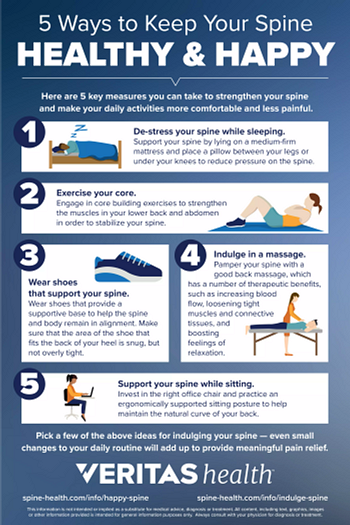
Infographic - 5 Ways to Keep Your Spine Healthy and Happy
Infographic:
5 Ways to Keep Your Spine Healthy and Happy
(larger view)

6. Match your pillow to your sleeping position

When you lie down to sleep, use a pillow that supports the natural curve of your neck and lower back. Depending on your sleep position, you will need different kinds and placement of pillows.

  • If you sleep on your side, use a thicker pillow to ensure your neck and head are positioned in the middle of your shoulders. Also, consider placing a pillow between your legs to take the pressure off your lower spine.
  • If you sleep on your back, use a medium thickness or flat pillow so that your neck is not propped up too high. Also, place a pillow under your knees to help maintain the normal curvature of your lower back.

As a general rule, avoid sleeping on your tummy or curling up too much in a fetal position as these positions can make your back more susceptible to injury and pain.

See Best Pillows for Different Sleeping Positions

7. Choose your food wisely

Your daily diet plays an important role in maintaining the health of your spine. Try limiting your diet mostly to foods you would find in nature—vegetables, fruits, meats, whole grains, and legumes, which are rich in antioxidants and anti-inflammatory agents.

Eating foods that are high in calcium and other nutrients and vitamins, such as oatmeal can help prevent spinal problems like osteoporosis and osteoarthritis.8

See Lifestyle and Diet Tips for Healthy Bones

Eventually, try to eliminate processed foods, and make sure to limit unhealthy sweets to an occasional treat. When you eat a healthy diet, over time, it can help you maintain a healthy weight, reducing pressure on your spine and minimizing back pain.

See A Healthy Weight for a Healthy Back

8. Exercise in a pool

Exercising in a pool reduces the downward stress of gravity as the buoyancy of water helps to support your spine, thus reducing the risk of injury or pain when you exercise. Also, the viscosity of water provides gentle resistance through friction.9 If you don’t want to exercise, simply walk in the pool in waist-deep water to help strengthen your back.

Water therapy programs are usually taught in warm water, and many people find the warmth soothing on their joints.

See Water Therapy Exercise Program

advertisement

9. Treat yourself to massage therapy

Studies show that massage therapy is an effective treatment for some types of back pain. Massages offer several potential benefits, including10,11:

  • Improving blood circulation for the recovery of sore muscles
  • Restoring spinal range of motion
  • Helping with insomnia
  • Increasing your endorphin levels—the body's natural chemicals that boost your feel-good emotions

You can perform an easy DIY back massage at home using tennis balls or visit a local massage therapist certified in therapeutic massages, such as the deep tissue technique.

See Massage Therapy Considerations for Lower Back Pain

10. Resolve to quit smoking

Smoking increases your likelihood of developing degenerative spinal disorders and back pain by damaging the vascular structures of your spinal discs and joints.12

Quitting is difficult, but there are many products, support groups, and strategies that have worked for thousands of people.

See Ways to Quit Smoking

11. Lead with your hips while lifting

Lifting heavy items without supporting your spine can put your lower back muscles in abnormal positions that may lead to painful muscle strains. Additionally, unsupported lifting may cause your spinal joints to lock or your spinal discs to rupture.

Correct lifting involves more than just incorporating your knees. It’s best to lead with the hips rather than the shoulders and keep your chest forward while lifting heavy weights.

See Avoid Back Injury with the Right Lifting Techniques

Pick a few of the above ideas for indulging your spine that you can easily incorporate into your daily life. Over time, even small changes to your daily routine will add up to provide meaningful and sustained pain relief.

5 Ways to Keep Your Spine Healthy and Happy


5 Ways to Keep Your Spine Healthy and Happy


Here are 5 key things you can do to help achieve more comfort and pain relief.

1. Let your spine really rest while sleeping.

While you're lying down, all the structures in your spine that have worked hard all day finally have an opportunity to relax and be rejuvenated. To make the most of this time, you need a mattress and pillows that allow your spine to rest in a supported and comfortable way.

alif
Infographic:
5 Ways to Keep Your Spine Healthy and Happy
(larger view)

Some tips to consider when sleeping include:

  • Use a firm or medium-firm mattress. Most people benefit from having a mattress that’s firm enough to support their spine, rather than an old or soft mattress that allows the spine to sag. As long as you're choosing a mattress to ensure the best support and sleeping position for your condition, there are many available types that can be helpful.

    See Mattresses and Sleep Positions for Each Back Pain Diagnosis

  • Keep your spine naturally aligned. For back sleepers, try placing a pillow beneath the knees to reduce stress on the lower back. For side sleepers, try placing a pillow between the knees to keep the hips balanced.1 Some people may also benefit from a neck pillow that supports the cervical spine. Experiment with a few different types of pillows to see what you find most comfortable.

    See Best Pillows for Different Sleeping Positions

Getting good sleep is important2 and prepare for a new day of handling heavy spinal loads.

See Practicing Good Sleep Hygiene

advertisement

2. Exercise your core to strengthen abs and back muscles.

Your core muscles—located in your lower back and abdomen—need to be strong and supple in order to support your spine and take pressure off your lower back.

Watch: Video: 5 Overlooked Tips to Protect Your Lower Back

Unfortunately, for most of us our core muscles are rarely used enough during everyday activities. These muscles need to be toned through specific, targeted exercises. Check with your doctor, physical therapist, or other health professional to learn which exercises may be appropriate for you. Many core exercises to help reduce back pain are also available on this website.

See Core Body Strength Exercises

3. Your shoes need to support your spine.

Whether you're walking for exercise or just to get where you're going, the shoes you wear play an important role in supporting your lower back. Good shoes provide a supportive base that helps the spine and body remain in alignment. For example, make sure the area of the shoe that fits the back of your heel is snug, but not overly tight. A good fit prevents over pronation or supination—or too much rolling of the foot to the outside or inside.

See Guidelines for Buying Walking Shoes

Also, consider using shoe orthotics or inserts if you need further balance or support.

4. Enjoy the benefits of massage.

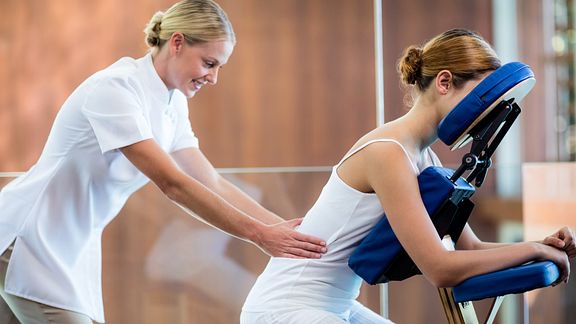
A good back massage has a number of therapeutic benefits, such as increasing blood flow, loosening tight muscles and connective tissues, and boosting feelings of relaxation. While a massage does not need to be vigorous to be soothing, some evidence suggests that a moderate-level massage offers more stress-relief benefits than a light-touch massage.3

Read more: Massage Therapy Considerations for Lower Back Pain

While it's not the same as going to a massage therapist, having a massage chair in your home can be a practical and easy way to get some of the benefits of a shiatsu or Swedish massage.

See Massage Chairs for Pain Relief

Massage has many therapeutic benefits. See: Massage Therapy for Lower Back Pain

5. Practice good ergonomics while sitting—and limit total sitting time.

The discs in your lower spine are loaded more while sitting than standing, so long periods of sitting can create or aggravate a painful back condition.4 Moreover, when sitting at a desk and/or looking at a computer screen, our natural tendency is to slouch and lean forward, stressing our lumbar discs even more.

Choosing the right office chair and practicing good posture while seated plays important roles in supporting the natural curves of your back.

See Choosing the Right Ergonomic Office Chair

advertisement

It's also important to do whatever you can to avoid sitting for long periods. Get up to stretch and walk around at least once an hour, try working at a standup desk intermittently during the day, or get up and pace around when talking on the phone. The spine is meant to move to stay healthy, and movement fuels the spine with healthy nutrients.

See Easy Exercise Program for Low Back Pain Relief

The topics covered here are simple ways to help support your spine and overall back health. Even when you are in serious pain and are undergoing extensive medical treatments, try to remember the simple things you can do for your back—even small changes can help with the healing process over time.

Watch: Video: 3 Simple Ways to Indulge Your Spine

Monday, May 9, 2016

6 Ways to Boost Women's Health

6 Ways to Boost Women's Health

To look and feel your best at every age, it’s important to make smart lifestyle and health choices. Here are six simple things that women can do every day (or with regularity) to ensure good health:


Health Tip #1: Eat a healthy diet. “You want to eat as close to a natural foods diet as you can,” says Donald Novey, MD, an integrative medicine physician with the Advocate Medical Group in Park Ridge, Ill. That means a variety of fresh fruits and vegetables and fewer processed foods. Eat whole grains and high-fiber foods and choose leaner cuts of meat, fish, and poultry. Include low-fat dairy products in your diet as well — depending on your age, you need between 800 and 1,500 milligrams of calcium daily to help avoid osteoporosis, Dr. Novey says. Avoid foods and beverages that are high in calories, sugar, salt, and fat.


Healthy eating will help you maintain a proper weight for your height, which is important because being overweight can lead to a number of illnesses. Looking for a healthy snack? Try some raw vegetables, such as celery, carrots, broccoli, cucumbers, or zucchini with dip made from low-fat yogurt.


If you’re not getting enough vitamins and nutrients in your diet, you might want to take a multivitamin and a calcium supplement to make sure you’re maintaining good health.


Health Tip #2: Exercise. Heart disease is the leading cause of death among women in America, but plenty of exercise can help keep your heart healthy. You want to exercise at least 30 minutes a day, five days a week, if not every day. Aerobic exercises (walking, swimming, jogging, bicycling, dancing) are good for women’s health in general and especially for your heart, says Sabrena Merrill, MS, of Lawrence, Kan., a certified personal trainer and group fitness instructor and a spokeswoman for the American Council on Exercise.


Health Tip #3: Avoid risky habits. Stay away from cigarettes and people who smoke. Don’t use drugs. If you drink alcohol, do so in moderation. Most women’s health studies show that women can safely consume one drink a day. A drink is considered to be about 12 to 14 grams of alcohol, which is equal to 12 ounces of beer (4.5 percent alcohol); 5 ounces of wine (12.9 percent alcohol); or 1.5 ounces of spirits (hard liquor such as gin or whiskey, 80-proof).


Health Tip #4: Manage stress. No matter what stage of her life — daughter, mother, grandmother — a woman often wears many hats and deals with a lot of pressure and stress. “Take a few minutes every day just to relax and get your perspective back again,” Novey says. “It doesn’t take long, and mental health is important to your physical well-being.” You also can manage stress with exercise, relaxation techniques, or meditation.


Health Tip #5: Sun safely. Excessive exposure to the sun’s harmful rays can cause skin cancer, which can be deadly. To protect against skin cancer, wear sunscreen with a sun protection factor (SPF) of at least 15 if you are going to be outdoors for more than a few minutes. Even if you wear sunscreen faithfully, you should check regularly for signs of skin cancer. Warning signs include any changes in the size, shape, color, or feel of birthmarks, moles, or freckles, or new, enlarging, pigmented, or red skin areas. If you spot any changes or you find you have sores that are not healing, consult your doctor.


Health Tip #6: Check for breast cancer. The American Cancer Society no longer recommends monthly breast self-exams for women. However, it still suggests them as “an option” for women, starting in their 20s. You should be on the lookout for any changes in your breasts and report any concerns to your doctor. All women 40 and older should get a yearly mammogram as a mammogram is the most effective way of detecting cancer in its earliest stages, when it is most treatable.


A woman’s health needs change as she ages, but the basics of women’s health remain the same. If you follow these six simple healthy living tips, you will improve your quality of life for years to come.

Monday, November 30, 2015

50 Simple Health Tips


<50 of 50>
Drink Green Tea

Hot or iced, green tea can help rev up your workout. Its catechins, antioxidants, and caffeine help increase the metabolic generation of heat. Drink a cup about 10 minutes before exercising.

<49 of 50>
Seek Out Slippery Elm

To soothe a sore throat, try slippery elm, which can help ease pain by coating irritated tissue. Look for slippery elm lozenges and suck on them as needed.

<48 of 50>
Bone Up on Calcium

Studies have found that supplementing with 500 to 1,200 milligrams of calcium daily may ease premenstrual symptoms. Other research suggests that getting calcium from foods (low-fat dairy, whole grains, cruciferous vegetables, spinach, and beans) may also ease PMS.

<47 of 50>
Eat Broccoli

For healthy gums, put this green vegetable on your grocery list. It's an excellent source of vitamin C and provides calcium as well, both of which have been linked to lower rates of periodontal disease.


<46 of 50>
Have Some Honey

Research suggests that honey may be more effective than over-the-counter cough syrup at quelling nighttime coughing. Use a medicinal-grade variety such as manuka honey and take up to 2 teaspoonfuls at bedtime.
Get More Med

<45 of 50>
Chew Some Fennel Seeds

Fennel seeds are considered a carminative, a substance that helps relieve gas. Chew and then swallow about half a teaspoon of the seeds after meals.

<44 of 50>
Try a Tincture

For that most unpleasant of stomach upsets, diarrhea, blackberry root tincture can help. This herb contains tannins, substances that have astringent effects on the intestinal lining. Look for the tincture at health-food stores or online (try herb-pharm.com) and take 1 teaspoon of it in water every two to four hours until symptoms subside.

<43 of 50>
Wash Up

To fend off colds, washing your hands well and often is the best step you can take. Use plain soap and water and scrub for as long as it takes to sing "Happy Birthday to You" twice.

<42 of 50>
Break Out the Duct Tape

Stick it to warts with this unusual remedy. Some research found that applying the tape over problem areas for about a week helped clear up warts as well as conventional treatment. Duct tape may work by irritating the skin, triggering an immune reaction that fights the infection typically responsible for warts.

PHOTO: PETER LAMASTRO
<41 of 50>
Find Friendly Fungi

The medicinal mushroom cordyceps has traditionally been used to promote lung strength, and some studies show that it may improve symptoms of respiratory conditions such as asthma and bronchitis. Look for capsules or tinctures of cordyceps; follow package directions.


PHOTO: RICK LEW
<40 of 50>
Try a Tongue Scraper

To combat bad breath, consider investing in this inexpensive plastic or metal device to remove bacteria from the back of your tongue. Some studies suggest that adding tongue scraping to your regimen may be slightly more effective at eliminating breath odor than just brushing your teeth.


<39 of 50>
Get Your Daily D

Get your vitamin D level checked with a simple blood test. D is at least as important as calcium for strong bones, and most Americans don't get enough. Get a minimum of 1,000 IU a day through supplements and food.


PHOTO: YUNHEE KIM
<38 of 50>
Drink Mint Tea

Ease occasional indigestion by sipping a cup of peppermint tea after your meal. Peppermint improves the flow of bile, which moves food through the digestive tract more quickly. Use peppermint with caution if you have acid reflux; it can make that problem worse.


<37 of 50>
Swab Your Soles

Are you tired of having stinky feet? Kill odor-causing bacteria quickly by soaking a cotton ball with rubbing alcohol and wiping your soles as needed.

<36 of 50>
Drink Cranberry Juice

Cranberries contain a substance that appears to keep bacteria from sticking to the walls of the urinary tract and has been shown to help prevent UTIs. Because cranberry cocktail is high in sugar, drink unsweetened juice diluted with water or take capsules of powdered cranberry extract.

<35 of 50>
Call a Friend

Keeping your social networks alive and well may help benefit your ticker over the long term. Social support has been linked to a lower risk of heart disease, and people who do have heart attacks fare better if they are socially connected.

<34 of 50>
Use Licorice

Treat canker sores, painful spots on the inside of the mouth, with deglycyrrhizinated licorice (DGL), which appears to soothe mucous membranes. Buy in powder form and mix with a little water to make a paste; apply it to the sore as needed.

PHOTO: KIRSTEN STRECKER
<33 of 50>
Cayenne Pepper

To warm up cold feet, sprinkle a bit of cayenne pepper into your socks. This folk remedy may help warm your toes by increasing circulation and improving blood flow.

<32 of 50>
Use Calendula Products

To ease acne, forgo benzoyl peroxide for lotion or soap made from calendula flowers, which may have antiseptic effects.


<31 of 50>
Watch Your Carbs

Trying to reduce belly fat? Pay attention to your carbohydrate intake and avoid artificial sweeteners. Sugary snacks and other refined carbs spike blood sugar and cause pounds to settle in your midsection. Choose whole grains, beans, and vegetables instead.


<30 of 50>
Try Acupressure

Calm a queasy stomach with this quick acupressure trick: Use your index and middle fingers to press down on the groove between the tendons that run from the base of your palm to your wrist. Wristbands that apply pressure to this spot are available at drugstores and online


Hydrate
<29 of 50>
Hydrate

To treat an acute migraine, drink a full glass of water -- dehydration can trigger headaches. Even if you need to take a medication for the pain, try wrapping your head with an Ace bandage so that it covers your eyes, then lie down and breathe deeply. This often helps the pain pass more quickly.


<28 of 50>
Consider Black Cohosh

Evidence is mixed, but several studies have found that women who take the herb black cohosh during menopause may experience fewer and milder hot flashes. Talk to your doctor about whether it's right for you; if so, choose a well-studied brand such as Remifemin.


<27 of 50>
Eat Japanese Food

In addition to following good dental hygiene, you can help prevent cavities by adding more shiitake mushrooms and wasabi to your diet. Both foods contain compounds that help fight the bacteria that cause plaque and cavities.

26 of 50>
Go Natural

Avoid products that can damage or dry out your fingernails, such as formaldehyde-containing polishes and acetone-filled removers.


PHOTO: ANITA CALERO
<25 of 50>
Go for GLA

If you've ruled out other causes of hair loss, such as stress, overuse of hair-care products, and certain medications and diseases such as hypothyroidism, consider supplementing with evening primrose oil. It's a good source of gamma-linolenic acid, an essential fatty acid that's needed for hair growth and is hard to get from your diet. Experts recommend taking 500 milligrams twice a day; expect to wait eight weeks to see results.


PHOTO: ALEXANDRA ROWELY
<24 of 50>
Arm Yourself with Arnica

Homeopathic creams, gels, and ointments that contain arnica, a flower similar to the daisy, have long been used to relieve swelling and bruising. Rub into the affected area, but stop using if you develop skin irritation.


<23 of 50>
Befriend a Bottle

For heel and arch pain, try stretching your foot by rolling it over a rolling pin or a bottle.


<22 of 50>
Make Small Talk

Engaging in casual conversation with others may help keep you as sharp as doing a word puzzle, according to some studies. Just 10 minutes of daily chatter appears to improve mental function and preserve memory.


<21 of 50>
Try Triphala

Avoid constipation and stay regular with Triphala, an Ayurvedic blend of three fruits that is believed to help tone the gastrointestinal tract. Look for capsules of Triphala and follow package directions.

<20 of 50>
Invest in a Neti Pot

Plagued with sinus problems? Rinse your nasal passages twice a day to flush out pollen and other irritants. Put saline solution (a 1/4 teaspoon salt and 1 cup warm water) in a plastic squirt bottle or a nasal irrigator, a spouted container that allows you to pour water directly into your nose. The solution should fill your nasal cavity and spill out the other nostril. Gently blow your nose afterward.

<19 of 50>
Keep Echinacea Close

If you feel a cold coming on, consider reaching for this age-old remedy. A 2007 meta-analysis showed that the herb can reduce cold symptoms. Aim for three grams daily in tincture or capsule form, starting at the first sign of symptoms.

PHOTO: YUNHEE KIM
<18 of 50>
Eat Avocados

For dry skin, incorporate more avocados into your diet. They're rich in monounsaturated fat and vitamin E, both of which promote healthy skin. Try them on salads and sandwiches, and even in smoothies.


<17 of 50>
Take Tulsi

Research suggests that this Ayurvedic herb, also called holy basil, may help manage levels of the stress hormone cortisol, helping to boost your mood. Look for teas and supplements in health-food stores and follow package directions.

PHOTO: KANA OKADA
<16 of 50>
Try Tea Tree Oil

For athlete's foot, reach for tea tree oil, an extract of the leaves of an Australian tree. It appears to have antiseptic properties and may work as well as or better than over-the-counter antifungal products. Apply a light coating of the oil to affected areas two to three times a day; continue for a week or two after symptoms disappear.

<15 of 50>
Go for Garlic

Adding raw or lightly cooked garlic and onions to your meals may help keep you healthy this winter. Both foods appear to possess antiviral and antibacterial properties and are believed to boost immunity.


PHOTO: CRAIG CUTLER
<14 of 50>
Get a Massage

Certain trigger points -- spots of tension in musculoskeletal tissue -- can cause back pain. Ask a massage therapist or other bodyworker who specializes in myofascial release or neuromuscular therapy to focus on these points during a massage.


<13 of 50>
Keep Capsaicin Cream on Hand

For sore muscles and joints, apply a cream or ointment that contains capsaicin, the active ingredient in chile peppers, two or three times a day. The heat from the peppers has been shown to help relieve pain.


<12 of 50>
Love Lavender

To ease stress and prepare for bed, soak in a hot bath spiked with a few drops of lavender essential oil. Play soothing music while you bathe to unwind further.


<11 of 50>
Eat Bananas

People whose diets are rich in potassium may be less prone to high blood pressure. Besides reducing sodium and taking other heart-healthy steps, eat potassium-packed picks such as bananas, cantaloupe, and oranges.

<10 of 50>
Benefit From Bilberry

Studies are mixed, but some have found that bilberry, a relative of the blueberry, may improve night vision. During World War II, fighter pilots reported better night vision after eating bilberry jam. Take 25 to 50 milligrams of bilberry extract; expect best results within the first few hours.

<9 of 50>
Pop a Probiotic

To keep yeast infections at bay, head for the vitamin aisle. Supplementing with "good" bacteria (for example, Lactobacillus or Bifidobacterium) may help restore the balance the of bacteria living in the female genital tract and inhibit the growth of yeast in women with recurrent infections. Foods such as naturally fermented sauerkraut, kimchi, and kefir, as well as yogurt with active cultures, also contain these bacteria.

<8 of 50>
Go Fish

If you suffer from dry eyes, up your seafood intake. Salmon, sardines, and mackerel contain omega-3 fatty acids, which the body uses to produce tears, among other things. Research suggests that people who consume higher amounts of these fats are less likely to have dry eyes.

<7 of 50>
Embrace Bitters

Combat a yen for sugar by following a Chinese medicine approach: Eat foods such as endive, radicchio, cooked greens, and olives.

<6 of 50>
Sniff Rosemary

According to some research, catching a whiff of this aromatic herb may increase alertness and improve memory. To stay sharp, try smelling fresh rosemary or inhaling the scent of rosemary essential oil before a test or meeting.

<5 of 50>
Get a Good Pair of Sneakers

Is your energy lagging? Though it may be the last thing you feel like doing when you're tired, exercise -- even a brisk walk -- can be more effective than a nap or cup of coffee at fighting fatigue.


PHOTO: JONATHON KANTOR
<4 of 50>
Enjoy Ginger

The volatile oils in ginger have long made it a useful herbal remedy for nasal and chest congestion. Pour 2 cups of boiling water over a 1-inch piece of peeled, grated ginger; steep for 10 minutes; and strain. Add a pinch or two of cayenne pepper to the water and drink as needed.


<3 of 50>
Rub Your Temples

Tame tension headaches by rubbing peppermint oil, Tiger Balm, or white flower oil into your temples. All three remedies contain menthol, which has analgesic properties.


<2 of 50>
Go Herbal

For varicose veins, try horse chestnut, an herbal extract that's been shown in studies to strengthen veins and reduce swelling. The herb is also available in topical creams, though there's not as much evidence for these.


<1 of 50>
Sip Oolong Tea

Research suggests that people with mild eczema who drink oolong tea three times a day may show improvement in itching and other symptoms. Compounds in the tea called polyphenols appear to be responsible.

GOOGLE ADS